Turn discovery into understanding
What might be the most valuable skill of this era?
Last week I sat down to a problem I’ve been thinking for months.
I needed to redesign a code that had grown bloated and tangled with unrelated decisions.
So I did what many engineers do now. I asked Claude.
It gave me a clean explanation of the problem, and several possible directions for the refactoring.
I felt like I understood it.
I generated a refactoring plan with multiple options and trade-offs.
Then I called my colleagues to discuss the design.
The moment someone asked why I preferred one approach over another, I found myself searching for an answer.
I could remember the conclusion.
I couldn’t find the arguments.
What happened?
I had discovered the solution. I hadn’t understood it.
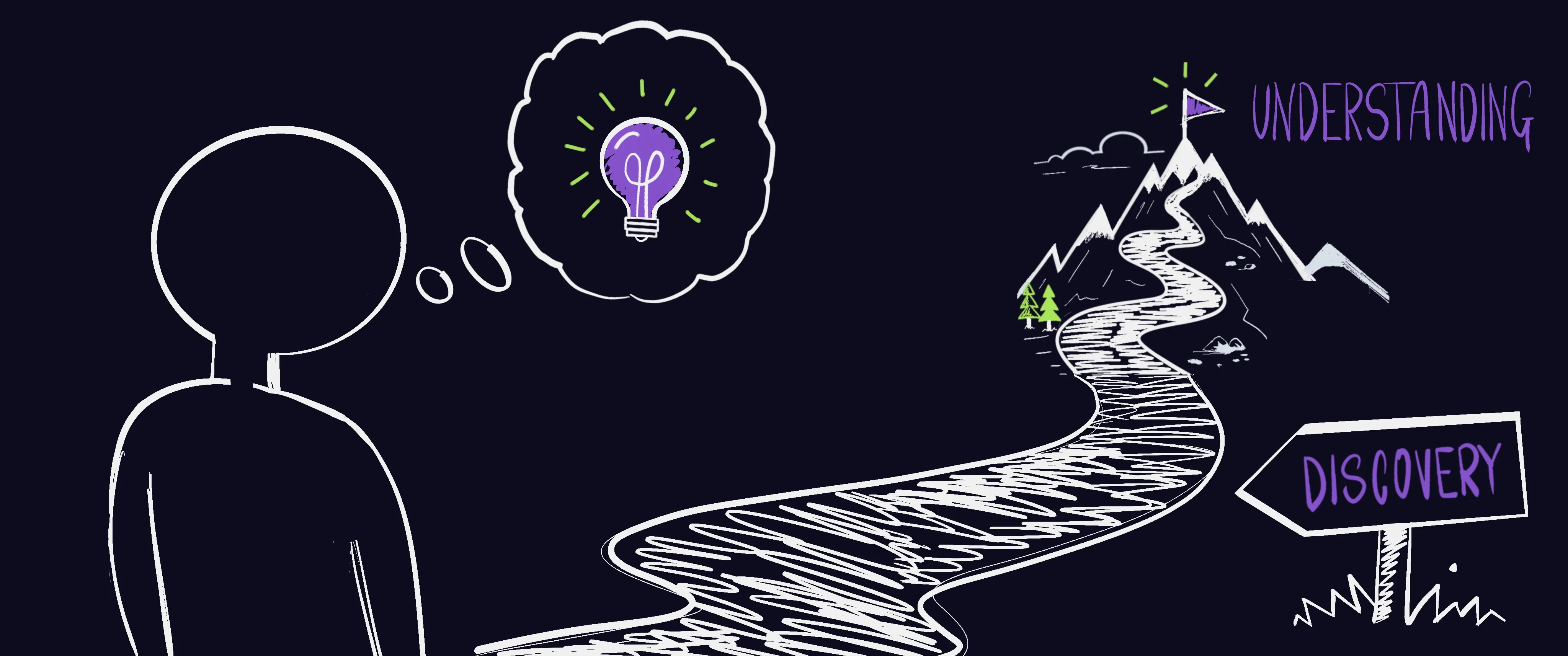
The difference is subtle, because from the inside, discovery and understanding feel almost identical.
Discovery is encountering an idea. Understanding is something you have to earn by learning it.
Learning is what lets you retrieve the idea later, explain it without assistance, apply it in a different context, and defend it when someone challenges it.
AI is exceptionally good at discovery.
A good AI assistant can compress hours of searching, reading documentation, and comparing approaches into a few minutes.
When an explanation arrives fully assembled, it is easy to mistake recognition for understanding. Everything makes sense while you are reading it. The real test comes later, when the explanation is gone and only your understanding remains.
-
Can you explain it?
-
Can you apply it?
-
Can you defend it?
If not, you may have discovered something valuable without actually learning it.
This is not an argument against AI.
Discovery is useful. Most of the time, discovery is enough. If I need to find new library, browse available solutions or just unblock myself on a task, discovery provides enormous value.
Architectural decisions, teaching others, reviewing designs, leading discussions, and solving unfamiliar problems all depend on knowledge that can be retrieved and applied without assistance.
Those situations require learning.
AI has made discovery almost free.
Learning is still expensive.
This may help explain why becoming a junior developer feels harder today than it did a few years ago.
For decades, companies absorbed the cost of learning. Junior engineers asked questions, made mistakes, needed code reviews, and relied on guidance from more experienced colleagues. In the short term, this was expensive. A senior engineer could often complete the same task faster alone.
But companies were not only paying for today’s output. They were investing in future expertise.
Nowadays, AI can answer questions instantly, generate implementations, suggest architectures, and explain unfamiliar concepts. A junior developer can move faster than ever before.
So why does getting that first job seem more difficult?
An AI assistant can propose solutions. It cannot give someone the experience required to understand the long-term consequences of choosing one over another.
The productivity of senior engineers increases dramatically with AI because they already possess the judgment needed to evaluate its output.
At the same time, teams often become leaner. A senior engineer who can deliver the work of two people with AI has often less time to mentor a junior engineer.
That creates a gap.
New developers have access to more information than any generation before them, but fewer opportunities to learn through close collaboration with experienced engineers.
That gap is what inspired me to create /teach-me. An AI skill that turns the agent into a learning tool.
A tool that helps transform discovery into understanding.
Because the engineers who benefit most from AI will not be the ones who use it the most.
They will be the ones who recognize when discovery is sufficient and when they need to invest the effort required to truly learn something.
Knowing the difference may become one of the most valuable skills of this era.
/teach-me is coming soon on my labs - stay tuned